The Eveness Journal
How AI Outfit Recommendations Help You Buy What You'll Actually Wear?
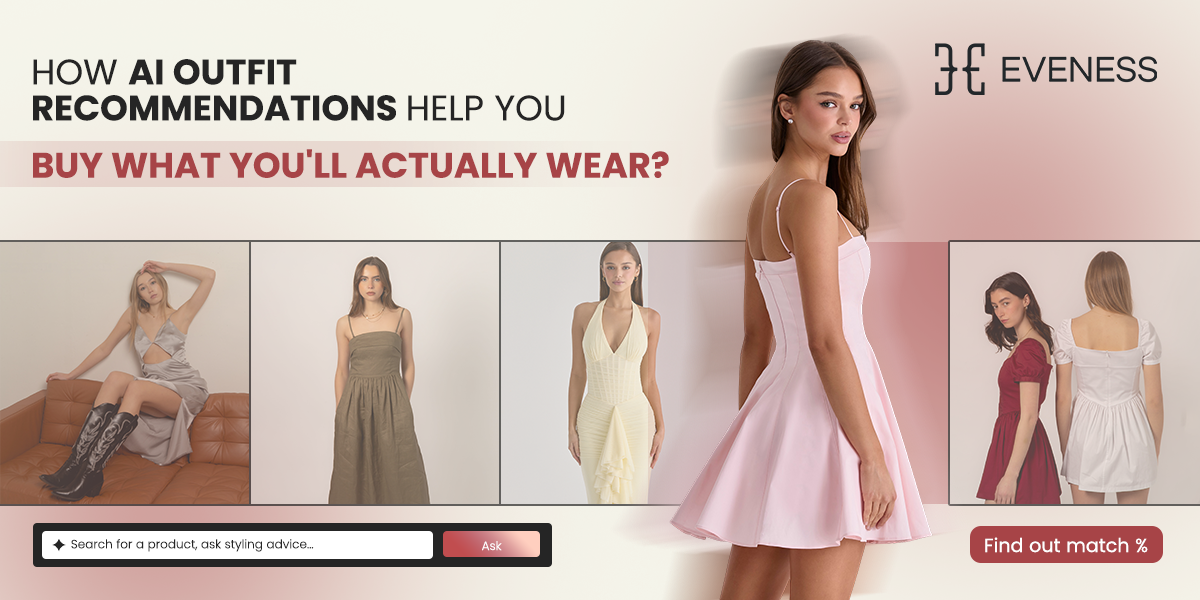
Most people wear only a fraction of the clothes they purchase, leaving closets full but outfit choices limited. Impulse buying, poor fit, changing fashion trends, and a lack of wardrobe planning often result in clothing that goes unworn. This is where AI outfit recommendations are transforming the shopping experience. By analyzing personal style preferences, body type, lifestyle, and shopping behaviour, AI helps consumers make smarter purchasing decisions. As AI powered fashion shopping continues to evolve, shoppers can enjoy more personalized experiences, fewer returns, and better wardrobe coordination. Platforms like Eveness AI make it easier to discover clothing you'll actually wear and love.
What Are AI Outfit Recommendations?
AI outfit recommendations are personalized clothing suggestions generated by artificial intelligence. These systems analyze user behaviour, style preferences, shopping habits, and wardrobe data to recommend outfits that align with individual tastes.
Unlike generic product recommendations, AI focuses on creating a complete styling experience. The goal is not simply to sell more products but to help users discover clothing they are more likely to wear regularly.
As shoppers interact with the platform, recommendations become increasingly accurate. The technology learns what colours, silhouettes, brands, and styles resonate most with each individual.
Why People Buy Clothes They Never Wear
Too Many Choices Create Decision Fatigue
Online shopping provides access to thousands of products. While variety seems beneficial, excessive options often overwhelm shoppers.
Many consumers purchase items simply because they appear attractive in isolation. Later, they realise the clothing does not fit their lifestyle or existing wardrobe.
Clothing Doesn't Match Existing Wardrobes
One of the biggest shopping mistakes is purchasing individual items without considering how they work with existing clothing.
A jacket may look great online, but if it doesn't coordinate with anything already owned, it may remain unworn.
This common issue contributes significantly to wardrobe clutter and buyer's remorse.
Lack of Personal Outfit Recommendations
Traditional online shopping often provides broad product suggestions based on popularity rather than individual style.
Without personal outfit recommendations, shoppers struggle to visualise how new purchases fit into their overall wardrobe strategy.
Sizing and Fit Uncertainty
Fit remains one of the biggest challenges in fashion e-commerce.
Many customers order multiple sizes because they are unsure which one will work best. This uncertainty leads to higher return rates and customer frustration.
Modern size recommendation technology helps address this problem by analysing measurements, purchase history, and brand-specific sizing data.
How AI Outfit Recommendations Improve Shopping Decisions
AI Learns Your Personal Style
Unlike traditional recommendation engines, AI studies individual preferences.
The technology may analyse the following:
Favorite colors
Preferred brands
Shopping habits
Lifestyle needs
Seasonal preferences
For example, a professional in Los Angeles may receive different recommendations than someone shopping primarily for outdoor activities.
Smart Style Recommendations Based on Real Behavior
One of the biggest strengths of AI is pattern recognition.
Instead of relying on assumptions, systems generate smart style recommendations based on actual user behaviour. Every click, purchase, save, and review helps improve future recommendations.
As a result, recommendations become more accurate over time.
AI Outfit Matcher Technology Creates Better Outfits
An AI outfit matcher helps shoppers coordinate pieces effectively.
Rather than recommending a single shirt or pair of pants, the system creates complete outfit combinations.
For example, if a customer purchases a blazer, the outfit matcher AI may suggest complementary trousers, shoes, and accessories that match the user's style profile.
AI Powered Wardrobe Recommendations Reduce Waste
Many consumers forget what they already own.
AI powered wardrobe recommendations solve this problem by helping users maximize existing clothing before purchasing new items. This encourages smarter shopping habits while reducing fashion waste.
Benefits of AI Outfit Recommendations
Buy More Clothes You'll Actually Wear
Perhaps the biggest advantage of AI outfit recommendations is relevance.
Instead of purchasing items based on temporary trends, shoppers receive suggestions aligned with their actual lifestyle and preferences.
This results in:
Higher wardrobe utilization
Better outfit coordination
Increased satisfaction
Save Time While Shopping
Consumers spend countless hours browsing products online.
AI dramatically reduces search time by presenting carefully curated selections tailored to each individual. This makes smart fashion online shopping faster and more efficient.
Reduce Clothing Returns
Returns remain a major challenge for fashion retailers.
By combining personalized recommendations, fit analysis, and style matching, AI helps shoppers make more confident purchasing decisions. This often leads to fewer returns and improved customer satisfaction.
Improve Shopping Confidence
Many shoppers hesitate before completing purchases.
Personalized recommendations reduce uncertainty by providing guidance based on real preferences and behaviour patterns.
Build a Smarter Wardrobe
AI encourages intentional purchasing.
Benefits include:
Better outfit coordination
Fewer impulse purchases
Improved budget management
More versatile clothing selections
Common Shopping Problems and AI Solutions
Problem 1: Impulse Purchases
Many purchases are driven by emotions rather than practical needs.
Solution: AI recommends items that fit established style patterns, reducing unnecessary spending
Problem 2: Clothing Doesn't Match Existing Wardrobe
Many shoppers buy pieces that cannot be paired effectively.
Solution: AI powered wardrobe recommendations ensure new purchases integrate with existing clothing.
Problem 3: Uncertainty About Fit
Fit concerns remain a leading cause of returns.
Solution: Advanced size recommendation tools improve confidence before purchase.
Problem 4: High Return Rates
Fashion retailers continue to face costly return challenges.
Solution: AI improves product relevance and outfit planning, helping customers make better decisions.
Problem 5: Online Shopping Overwhelm
Too many options often lead to decision paralysis.
Solution: Curated recommendations simplify the buying process.
Why More Consumers Are Choosing Eveness AI
Eveness AI is designed to deliver a highly personalized shopping experience by providing recommendations tailored to each user's unique style preferences, lifestyle, and fashion goals. Unlike traditional recommendation systems, the platform continuously learns from user interactions, allowing its AI outfit recommendations to become more accurate and relevant over time. This adaptive approach helps shoppers make more confident purchasing decisions because suggestions are based on real preferences rather than generic trends. Additionally, Eveness AI offers AI powered wardrobe recommendations that help users maximize the value of their existing clothing while identifying new pieces that complement their wardrobe, creating a smarter and more intentional shopping experience.
Complete Fashion Personalization Ecosystem
Eveness AI combines:
AI fashion stylist technology
AI outfit matcher
AI Fashion Outfit Generator
Personalized shopping recommendations
Intelligent wardrobe planning
This creates a comprehensive fashion experience.
How to Start Using AI Outfit Recommendations
Build Your Style Profile: Share preferences, favorite brands, and style goals.
Connect Your Wardrobe: Upload existing clothing items to improve recommendation accuracy.
Review Recommendations Regularly: Provide feedback to help the system learn your preferences.
Shop More Intentionally: Focus on versatile pieces that complement your wardrobe.
Conclusion
The biggest challenge in fashion today isn't a lack of choices it's choosing the pieces you'll actually wear. AI outfit recommendations help shoppers make smarter decisions by reducing impulse purchases, improving outfit coordination, and matching clothing to personal style preferences. With better personalization, fewer returns, and more intentional shopping habits, AI creates wardrobes that reflect real lifestyles rather than short-lived trends. Platforms like Eveness AI combine advanced styling technology, AI powered wardrobe recommendations, and AI outfit matcher tools to help consumers build a functional, versatile wardrobe filled with pieces they genuinely love wearing.
Frequently Asked Questions
Q1. What are AI outfit recommendations?
AI outfit recommendations are personalized clothing suggestions generated by artificial intelligence based on your style preferences, shopping behavior, body type, and wardrobe choices. They help you find outfits that match your lifestyle and personal taste.
Q2. How can AI outfit recommendations help me buy clothes I’ll actually wear?
By analyzing your preferences and past shopping habits, AI recommends items that fit your style and existing wardrobe. This reduces impulse purchases and helps you invest in clothing you'll wear regularly.
Q3. What is an AI outfit matcher?
An AI outfit matcher is a tool that automatically pairs clothing items that work well together. It helps create complete outfits by considering colours, styles, occasions, and wardrobe compatibility.
Q4. Can AI outfit recommendations reduce clothing returns?
Yes. AI improves shopping confidence by providing better style guidance and size recommendations. When shoppers choose items that fit their preferences and needs, return rates often decrease.
Q5. How does Eveness AI improve the shopping experience?
Eveness AI combines AI outfit recommendations, AI powered wardrobe recommendations, and intelligent styling tools to deliver personalized fashion suggestions. This helps shoppers save time, make smarter purchases, and build a wardrobe they truly enjoy wearing.