The Eveness Journal
Virtual Try-On vs. Size Recommendation: Which Technology Delivers Better Results?
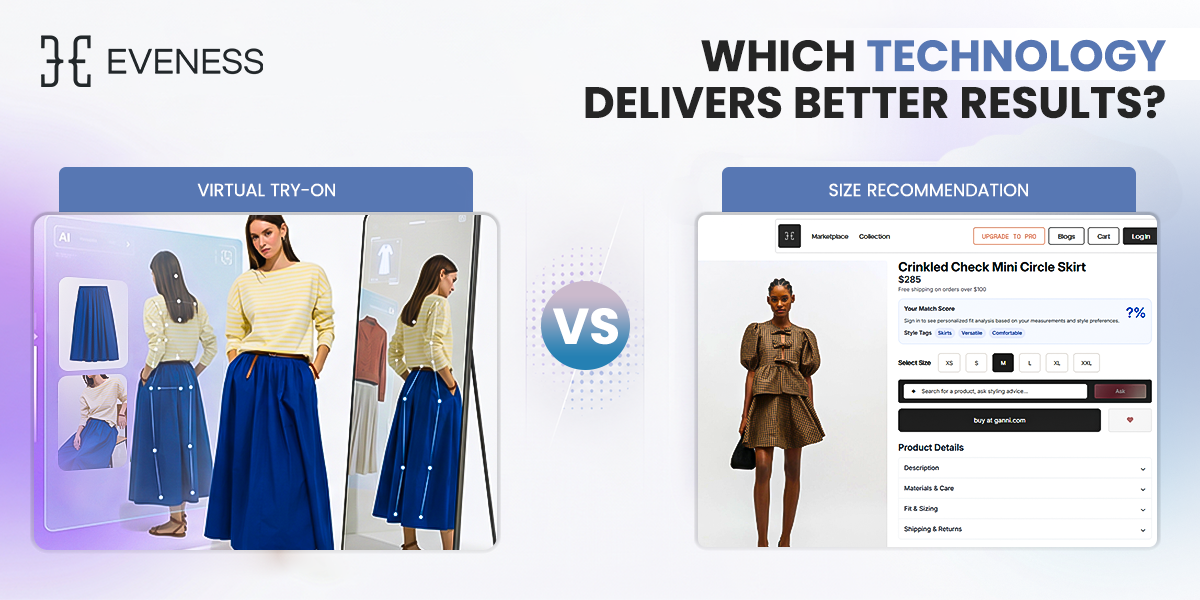
Online fashion shopping has never been more convenient, yet millions of shoppers still return clothing because the fit, size, or appearance doesn't match their expectations. Despite advances in e-commerce, uncertainty remains one of the biggest barriers to customer confidence.
To solve these challenges, fashion retailers are investing heavily in technologies such as virtual try-on, size recommendation, and AI-powered fashion shopping. These innovations help shoppers make smarter decisions before completing a purchase.
Consumers today want more than product photos and sizing charts. They want accurate fit guidance, personalized recommendations, and a genuine try before you buy clothes experience. Platforms such as Eveness AI are helping brands deliver exactly that by combining personalization, styling intelligence, and advanced shopping technology.
But when it comes to reducing returns and improving customer satisfaction, which solution performs better: virtual try-on technology or size recommendation systems?
What Is Virtual Try-On?
Understanding Virtual Try-On Technology
A virtual try on system allows shoppers to digitally visualize clothing before purchasing. Using technologies such as augmented reality (AR), computer vision, and digital garment rendering, customers can see how products may look on their bodies without visiting a physical store.
Modern Virtual try-on experiences are becoming increasingly realistic, helping consumers gain confidence before making a purchase.
A popular example is a virtual try on dress feature, where shoppers can preview how a dress may appear on their body shape and proportions.
How Virtual Try-On Works
Most virtual try-on platforms follow a simple process:
Upload a photo or body image
Create a digital body representation
Overlay garments virtually
View outfits from different angles
Compare multiple styles instantly
This interactive experience makes online shopping more engaging and informative.
Benefits of Virtual Try-On
Improves purchase confidence
Enhances customer engagement
Makes outfit visualization easier
Supports try-before-you-buy decisions
Creates memorable shopping experiences
What Is Size Recommendation Technology?
Understanding Size Recommendation Systems
Size recommendation technology focuses on helping shoppers choose the correct garment size before purchasing.
Unlike virtual try-on tools, which emphasize appearance, size recommendation systems prioritize fit accuracy using customer data and predictive analytics.
These systems analyse:
Height
Weight
Body measurements
Previous purchases
Brand-specific sizing information
Return history
How AI Determines the Right Size
Modern size recommendation engines use machine learning models that continuously improve over time.
By comparing customer data with millions of previous transactions, AI can predict which size is most likely to fit correctly.
For example, if a shopper frequently purchases medium-sized tops from certain brands but returns large sizes, the system learns from those behaviors and adjusts future recommendations.
Why Size Recommendations Matter
Industry studies consistently show that sizing uncertainty remains one of the leading causes of apparel returns.
Many consumers order multiple sizes of the same item because they are unsure which one will fit best. Size recommendation technology helps eliminate this uncertainty and reduces unnecessary purchases.
Virtual Try-On vs. Size Recommendation: Head-to-Head Comparison
Accuracy of Fit
When evaluating fit accuracy, size recommendation systems generally have an advantage.
A virtual try-on can show how clothing might look visually, but it cannot always predict how a fabric will stretch, drape, or feel when worn.
Size recommendation technology uses measurements and purchasing data to predict actual fit more accurately.
User Experience
Virtual try-on tools are highly interactive and visually engaging.
Customers enjoy experimenting with outfits, colours, and styles before buying. This creates a fun shopping experience that encourages exploration.
Size recommendation systems are simpler. They typically require only a few measurements and provide an instant size suggestion.
Both improve shopping confidence, but they do so in different ways.
Confidence Before Purchase
Virtual try-on helps shoppers answer questions such as the following:
Will this outfit suit me?
Does this colour look good on me?
How will this dress appear on my body?
Size recommendation helps answer:
Which size should I buy?
Will this item fit comfortably?
Should I size up or down?
Together, they address different concerns that often lead to abandoned carts or returns.
Impact on Return Rates
Virtual try-on technology reduces appearance-related returns.
Size recommendation technology reduces fit-related returns.
Because sizing issues account for a large percentage of apparel returns, many retailers see stronger return-reduction results from accurate size recommendation systems.
However, visual dissatisfaction also contributes to returns, making virtual try-on valuable as well.
Which Technology Performs Better?
The answer depends on the goal.
Virtual try-on excels at the following:
Outfit visualization
Customer engagement
Style confidence
Product discovery
Size Recommendation excels at the following:
Fit prediction
Size accuracy
Return reduction
Purchase confidence
Rather than viewing them as competitors, leading retailers increasingly combine both solutions.
How AI Fashion Stylist Technology Improves Both Solutions
The Role of an AI Fashion Stylist
An AI fashion stylist goes beyond fit and appearance.
A modern fashion stylist AI analyzes customer preferences, lifestyle habits, shopping history, favourite colours, and style goals to deliver personalized recommendations.
An AI based fashion stylist continuously learns from user behaviour and improves recommendations over time.
AI Outfit Recommendations Improve Purchase Decisions
Personalization is one of the strongest tools for reducing shopping uncertainty.
Advanced AI outfit recommendations help shoppers discover clothing that matches their preferences and existing wardrobe.
A shopper who frequently buys neutral-colored business attire will receive different recommendations than someone who prefers casual streetwear.
These smart style recommendations based on actual behavior help customers make more confident purchases.
AI Outfit Matcher Creates Better Outfit Coordination
An AI outfit matcher analyzes wardrobe pieces and suggests combinations that work well together.
An effective outfit matcher AI can recommend complementary colors, matching accessories, and complete outfits.
This reduces the likelihood of purchasing items that never get worn because they don't coordinate with existing clothing.
Benefits of Combining Virtual Try-On and Size Recommendation
A Complete Shopping Experience
Retailers that combine both technologies provide the most comprehensive customer experience.
Shoppers can visualize how an item looks while also receiving accurate sizing guidance.
Higher Customer Confidence
Combining both systems helps customers answer two critical questions:
Will this look good on me?
Will this fit me properly?
When both concerns are addressed, purchase confidence increases significantly.
Reduced Return Rates
Many returns happen because shoppers are uncertain about appearance, fit, or both.
Combining virtual try-on with size recommendation solves multiple problems simultaneously and creates a smoother shopping journey.
Increased Customer Satisfaction
Benefits include:
Faster purchasing decisions
Better fit outcomes
Fewer disappointments
Improved shopping experiences
Higher trust in online retailers
How Eveness AI Is Transforming AI Powered Fashion Shopping
Personalized Fashion Discovery
Eveness AI helps shoppers discover products that align with their personal style, body type, and lifestyle needs.
Its personalization capabilities create more relevant shopping experiences and reduce decision fatigue.
AI Fashion Marketplace Innovation
As an advanced AI fashion marketplace, Eveness AI connects shoppers with intelligent recommendations designed specifically for their preferences.
Instead of browsing thousands of products, users receive curated selections that match their unique style profile.
AI Fashion Outfit Generator Technology
An AI Fashion Outfit Generator creates complete looks instantly.
Using data such as personal style, body shape, occasion, and budget, the system recommends coordinated outfits that simplify shopping decisions.
AI Powered Wardrobe Recommendations
AI powered wardrobe recommendations help shoppers maximize what they already own.
This encourages smarter purchasing decisions, reduces impulse buying, and creates a more sustainable approach to fashion.
Conclusion
Choosing between virtual try-on and size recommendation isn't about finding a single winner. Virtual try-on helps shoppers see how clothing may look, while size recommendation technology helps them select the right fit. Together, they create a more confident and personalized shopping experience. When combined with tools like an AI personal fashion stylist, AI outfit recommendations, and intelligent wardrobe insights, they can significantly improve purchase decisions and reduce returns. Platforms like Eveness AI are helping brands deliver smarter fashion online shopping experiences that increase customer satisfaction and build long-term loyalty.
Frequently Asked Questions
Q1: What is virtual try-on technology?
Virtual try-on technology allows shoppers to digitally preview clothing on a virtual representation of themselves before purchasing.
Q2: How accurate are size recommendation systems?
Modern AI-driven systems can be highly accurate when provided with reliable measurements and purchasing history.
Q3: Can virtual try-on predict clothing fit?
It helps visualize appearance but may not always accurately predict comfort, stretch, or garment movement.
Q4: How does an AI outfit matcher work?
It analyzes wardrobe items, colors, styles, and preferences to recommend coordinated outfit combinations.
Q5: What is an AI Fashion Outfit Generator?
It automatically creates complete outfit suggestions based on user preferences, body type, occasion, and style goals.
Q6: Why is smart fashion online shopping becoming more popular?
It offers personalized experiences, improved purchase confidence, reduced returns, and greater convenience for shoppers.