The Eveness Journal
What is a Midi Dress & What Body Shape Suits a Midi Dress?
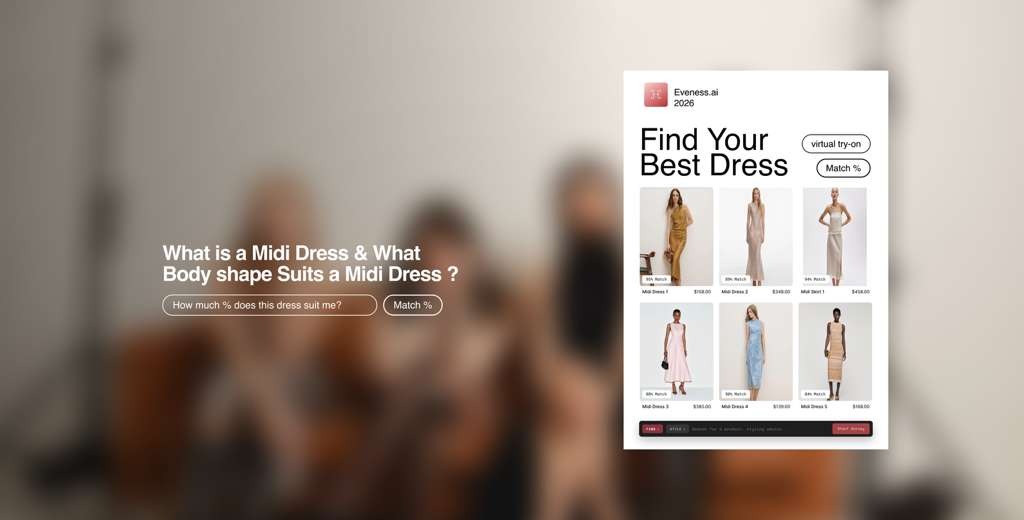
There’s a reason midi dresses have become such a wardrobe staple. They sit in that comfortable middle ground between a mini and a maxi, giving you enough coverage to feel polished while still keeping an outfit light and easy.
But finding a midi dress that looks great on you isn't always as simple as picking one off the rack. The length is only one part of the equation. The neckline, waist placement, fabric, and shape of the skirt can all change how the dress works with your proportions.
So, what exactly is a midi dress, and is there a particular body shape that suits one best?
What Is a Midi Dress?
A midi dress usually falls somewhere between the knee and ankle, most often around the middle or lower part of the calf.
Unlike a mini or maxi, the midi doesn't have one fixed look. You can find fitted designs, flowing skirts, wrap silhouettes, shirt dresses, and relaxed styles. That's what makes midi dresses so easy to work into different wardrobes.
A fitted midi can feel sophisticated for an evening out, while a loose cotton or linen midi dress can be an effortless choice for a summer afternoon.
The right length will also vary from person to person. A dress that falls just below the knee on one woman may sit closer to the ankle on someone taller.
Why Do Midi Dresses Suit So Many Styles?
The versatility of midi dresses is probably their biggest advantage.
You can wear one with trainers and a denim jacket for a casual outfit or switch to heels, jewellery and a structured bag for something more polished. Add a blazer when you want a smarter look, or a cardigan when the temperature drops.
This flexibility is also why midi dresses work across seasons. The same dress can look completely different depending on what you wear with it.
It's less about following a particular fashion rule and more about finding a silhouette that feels like you.
What Body Shape Suits a Midi Dress?
Here's the good news: there isn't one body shape that "belongs" in a midi dress.
Almost anyone can wear one. What matters is finding a cut that works with your natural proportions.
Hourglass Shapes
If you have a defined waist with fairly balanced shoulders and hips, a waist-focused midi can highlight your natural proportions.
Wrap designs, belted dresses, and fitted waists are particularly easy choices. They give the outfit some structure without hiding your shape.
Pear Shapes
For pear-shaped proportions, you might prefer a midi that brings a little more attention towards the upper body.
Interesting necklines, structured shoulders, or subtle details around the bust can create balance. A-line skirts are another popular option because they skim rather than cling around the hips.
Apple Shapes
If you carry more volume around your middle, you don't need to hide it under oversized clothing.
A softly draped midi, an empire waist, or a relaxed fit can create a comfortable silhouette without feeling restrictive. V-necklines can also add a little visual length.
Straight or Rectangle Shapes
If your shoulders, waist, and hips have a more similar width, you have plenty of freedom to experiment.
Belts, ruching, pleats, and wrap styles can add definition, while structured midi dresses can create a more shaped silhouette.
But these aren't rules you have to follow. They're simply starting points.
Does Your Height Matter?
Height can change how a linen midi dress looks, mainly because the same dress will fall at different points on different people.
If you're petite, you may find that a midi finishing around the narrower part of your calf feels more balanced. Showing some ankle and choosing shoes that don't visually cut off the leg can also help.
Taller women can experiment with longer midi lengths and fuller skirts.
Ultimately, don't worry too much about what the product description calls "midi". Look at where the hem actually falls on your body.
Why Linen Midi Dresses Are So Popular
For relaxed summer dressing, few fabrics have the same appeal as linen.
Midi linen dresses for women combine the easy silhouette of a midi with the naturally relaxed texture of linen. They work particularly well with sandals, simple jewellery and minimal accessories.
A linen midi dress doesn't need much styling to look put together. That's part of its charm.
You can keep things casual during the day and add a structured bag or a pair of heeled sandals when you're heading somewhere a little smarter.
Could a Convertible Dress Be More Useful?
If you like getting more than one look from your clothes, it's worth exploring a convertible dress.
These dresses are designed to be worn or adjusted in different ways, depending on the design. You might change the straps, neckline, sleeves, or overall styling to create a different appearance.
There are plenty of convertible dress styles, making them useful for anyone who wants a smaller wardrobe with more possibilities.
A single dress that can be styled in several ways can also be a smart option when you're travelling or packing for an event where you need more than one outfit.
How Do You Find the Right Midi for You?
Generic body-shape guides can be useful, but they can only tell you so much.
Your proportions aren't the same as anyone else's. Neither are your colouring, facial features, personal style, or preferences.
That's the thinking behind Eveness AI. Instead of treating fashion as a one-size-fits-all experience, Eveness uses personal information such as body shape, proportions, and colouring to help shoppers understand which pieces may work better for them.
The platform's Match Score and virtual try-on features are designed to make online shopping more personal. Rather than simply seeing a dress on a model and guessing how it might look on you, you can use personalised tools to make a more informed decision.
That can be especially useful when you're comparing different midi dresses with different necklines, fabrics and silhouettes.
The Best Midi Dress Is the One That Feels Right
There are plenty of styling rules online telling you what you should and shouldn't wear. But fashion doesn't have to work that way.
The most flattering midi dresses are the ones that make sense for your proportions, your wardrobe, and your personal style.
Maybe that's a fitted wrap dress. Maybe it's a loose linen midi dress. Maybe you prefer a more adaptable convertible dress that can be styled several ways.
The point is to understand what works for you, rather than trying to fit yourself into a category.
With Eveness AI, you can explore personalised fashion recommendations and discover pieces based on your individual features and proportions. It's a more useful way to approach online shopping when you're tired of wondering whether something will actually suit you.
Because the real question isn't simply, "Does this dress look good?"
It's "Does it look good on me?"
Frequently Asked Questions
Q1. What is the ideal length for a midi dress?
A midi dress generally falls between the knee and ankle, usually somewhere around the middle or lower calf. The ideal length depends on your height and proportions.
Q2. Can every body shape wear midi dresses?
Yes. Midi dresses can work for every body shape. The key is choosing a neckline, waist position, skirt shape, and fabric that you personally feel comfortable in.
Q3. Are midi linen dresses good for summer?
Absolutely. Midi linen dresses for women are particularly popular for warm-weather dressing because linen has a lightweight, relaxed feel and works well for both casual and smarter occasions.
Q4. What is a convertible dress?
A convertible dress is designed to be styled in multiple ways. Depending on the design, you may be able to change the neckline, straps, sleeves or overall shape.
Q5. Where can I find different convertible dress styles?
You can explore different convertible dress styles alongside other personalised fashion options through Eveness AI, where recommendations are tailored around individual preferences and features.