The Eveness Journal
What to Look for When Buying a Midi Dress?
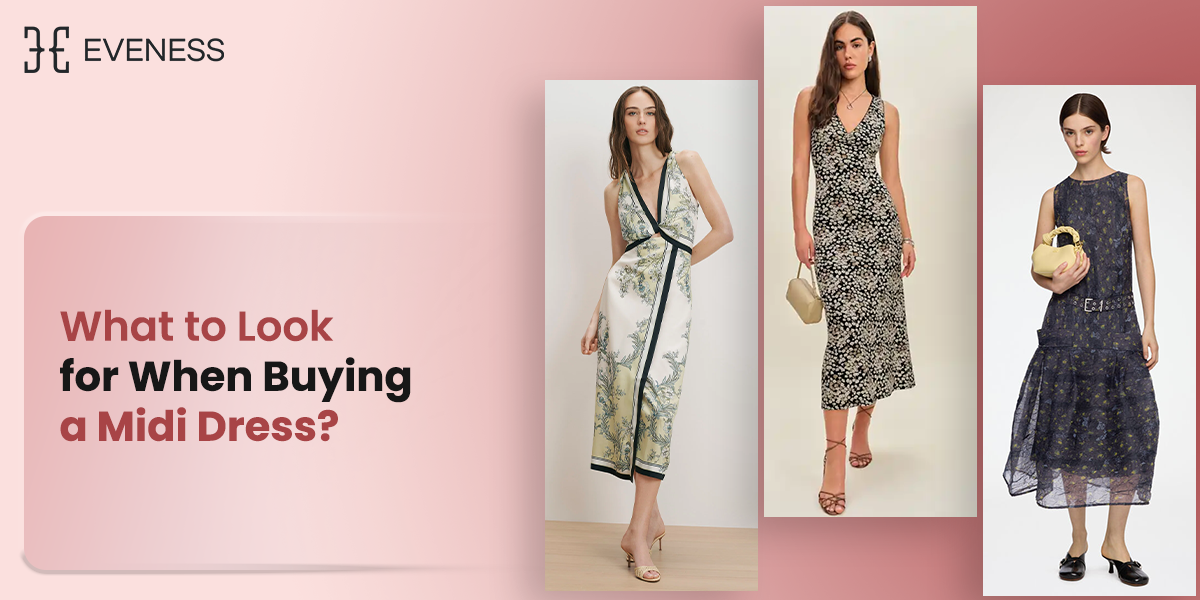
What to Look for When Buying a Midi Dress?
When shopping for midi dresses, the right choice depends on more than color or trend. You should consider the length, silhouette, fabric, occasion, and personal style before buying. A well-chosen midi dress can work for everyday outfits, office looks, weddings, vacations, and evening events.
You can also explore options such as a linen midi dress, midi linen dresses for women, and versatile convertible dress styles for more flexibility. With Eveness AI, you can compare fashion choices and find styles that better match your preferences.
What Length Should You Look for in a Midi Dress?
A midi dress generally falls between the knee and ankle, with the hem usually landing around the middle to lower part of the calf. However, the ideal length can vary from person to person.
The exact hem position matters because it can affect your overall proportions. A hem that falls at a wider part of the calf may visually shorten the legs, while a slightly higher or lower hem can create a more balanced appearance.
Your height and leg proportions also affect the best length. Instead of choosing a dress simply labeled “mid-calf,” check where the hem will actually fall on your body.
A slightly-above-mid-calf hem can show more of the lower leg, while a slightly-below-mid-calf hem can offer more coverage. Choose the position that feels comfortable and proportionate.
What Is the Best Midi Dress Length for Petite Women?
Petite women can often benefit from slightly shorter midi dresses that expose more of the lower leg. A higher waistline can also create the appearance of longer legs.
You can pair a shorter midi with pointed-toe shoes, low-profile sandals, or shoes close to your skin tone to create a continuous visual line.
What Midi Length Works Best for Tall Women?
Tall women have more flexibility with midi lengths. A dress that falls lower on the calf can create a balanced and refined appearance.
You can experiment with different hem positions, from just below the knee to closer to the ankle. Your proportions and the dress silhouette should guide your choice.
How Can You Check the Hemline Before Buying Online?
Before buying online, check the garment measurements instead of relying only on the model's height. Compare the listed dress length with your own measurements.
You can measure from your shoulder or waist to the point where you want the hem to fall. This gives you a better idea of the final length before ordering.
How Should You Choose a Midi Dress for Your Body Shape?
The best midi dress should work with your preferred proportions and personal style. Instead of trying to hide a particular body shape, focus on silhouette, waist placement, and comfort.
A defined waist can create structure, while a relaxed silhouette can provide more movement. Different cuts can emphasize or soften different areas based on your preferences.
Midi Dresses for Hourglass Shapes
Hourglass proportions can work well with styles that follow the natural waist. Wrap, fitted, and fit-and-flare midi dresses can highlight the waist while maintaining balance.
You can also add a belt when you want more waist definition.
Midi Dresses for Pear Shapes
Pear-shaped proportions can work well with dresses that create visual balance between the upper and lower body. A-line styles can provide comfortable movement through the hips.
Interesting necklines, sleeves, or upper-body details can also draw attention upward.
Midi Dresses for Apple Shapes
Apple-shaped proportions can work well with styles that provide comfortable room around the midsection. Relaxed shirt dresses, empire-waist designs, and softly structured silhouettes can be useful choices.
Choose fabrics that drape rather than cling if comfort is important.
Midi Dresses for Rectangle Shapes
Rectangle proportions can work well with styles that add shape around the waist. Wrap dresses, belts, ruching, and fit-and-flare silhouettes can introduce definition.
You can also choose a straight-cut midi for a clean and minimal appearance.
Which Midi Dress Types and Silhouettes Should You Consider?
Different midi dress styles create different visual effects. The construction can make a dress feel formal, relaxed, fitted, or versatile.
Consider how you plan to wear the dress. A structured design may suit the office, while a relaxed linen midi dress can work well for warm-weather outings.
A-Line and Fit-and-Flare Midi Dresses
A-line and fit-and-flare dresses define the waist before widening toward the hem. These styles offer comfortable movement while maintaining a polished shape.
They can work well for workwear, brunch, casual events, and special occasions.
Wrap Midi Dresses
Wrap dresses use overlapping fabric to create an adjustable waist. This makes them useful when you want flexibility in fit.
They can transition between casual and formal settings depending on the fabric, shoes, and accessories.
Bodycon Midi Dresses
Bodycon midi dresses closely follow the body's shape. They can create a sleek, modern appearance for dinners, parties, and evening events.
Choose fabrics with enough stretch and structure for comfortable movement.
Slip and Satin Midi Dresses
Slip and satin midi dresses have a lightweight, fluid appearance and can create an elegant look with minimal styling.
You can wear them with heels and jewelry for evening events or layer them with a jacket for a more casual outfit.
Shirt and Casual Midi Dresses
Shirt midi dresses offer a relaxed and practical option for everyday wear. They often feature buttons, collars, sleeves, and adjustable waist details.
You can pair them with sneakers, sandals, or ankle boots depending on the season.
Which Fabric, Color, and Pattern Should You Choose?
Fabric affects comfort, drape, movement, breathability, and formality. Lightweight materials work well for warm weather, while heavier fabrics can provide more structure.
A linen midi dress is a practical summer choice because linen is lightweight and breathable. If you prefer midi linen dresses for women, check the construction, lining, and fit for comfortable movement.
You should also check whether lighter fabrics are transparent under bright light. A lining can provide additional coverage.
Best Fabrics for Casual and Summer Midi Dresses
Cotton, linen, lightweight viscose, and breathable blends can work well for casual and summer outfits.
A linen midi dress can be especially useful for vacations, outdoor lunches, beach destinations, and warm everyday wear.
Fabrics for Formal and Evening Midi Dresses
Satin, silk, velvet, crepe, and structured blends can create a polished appearance. These fabrics can provide the drape or structure needed for formal settings.
Choose the material based on the event, season, and amount of movement you expect.
Choosing Colors and Prints That Suit Your Style
Solid colors are easy to style and can make a midi dress more versatile. Subtle prints can add interest, while larger patterns create a stronger visual statement.
Choose colors and patterns that match your personal convertible dress styles and that you will enjoy wearing regularly.
How Do You Choose a Midi Dress for Different Occasions?
The same midi length can work across different settings because fabric, neckline, sleeves, and structure change the overall impression.
You can make a dress casual with sneakers and a simple bag or more formal with heels, jewelry, and a structured jacket.
Midi Dresses for Work
For work, choose polished silhouettes with practical necklines and comfortable coverage. A-line, wrap, and shirt midi dresses can work well in professional environments.
Pair them with a blazer, simple pumps, loafers, or ankle boots.
Midi Dresses for Weddings and Special Events
For weddings and special events, consider satin, silk, chiffon, crepe, or other refined fabrics. Elegant necklines and thoughtful accessories can make a midi dress feel event-ready.
Avoid overly casual materials unless the event calls for relaxed attire.
Midi Dresses for Casual Outings
Casual midi dresses work well for brunch, shopping, travel, and everyday activities. Cotton, linen, and relaxed blends can provide comfort and movement.
Add sneakers, sandals, a crossbody bag, and simple jewelry for an effortless look.
Midi Dresses for Evening Occasions
For evening occasions, consider richer fabrics, darker colors, sleek silhouettes, or subtle details. Bodycon, satin, slip, and fitted midi dresses can work particularly well.
Heels and statement jewelry can complete the outfit.
Ready to Find Your Perfect Midi Dress? Shop Smarter With Eveness
Choosing the right midi dresses becomes easier when you know what to evaluate. Consider the hemline, silhouette, fabric, color, occasion, and styling options before purchasing.
For warm-weather wardrobes, a linen midi dress can provide comfort and versatility. If you prefer flexible styling, convertible dress styles can give you multiple ways to create different looks from one piece.
Eveness AI can help you explore fashion choices and compare styles based on your preferences. Instead of choosing a dress only because it looks good in a product photo, consider how it fits your wardrobe, lifestyle, and personal style.
Frequently Asked Questions About Midi Dresses
1. What is the ideal length of a midi dress?
A midi dress typically falls between the knee and ankle, most commonly around the middle to lower calf. The ideal length depends on your height, proportions, personal preference, and the type of shoes you plan to wear.
2. Are midi dresses suitable for all body shapes?
Yes. Midi dresses are available in many silhouettes, including A-line, wrap, fit-and-flare, straight, and bodycon styles. Choosing the right waist placement, fabric, and silhouette can help you find a comfortable style that suits your preferred proportions.
3. Is a linen midi dress good for summer?
Yes. A linen midi dress can be a practical summer option because linen is lightweight and breathable. For additional comfort, check the fabric construction, lining, fit, and whether the material is suitable for the climate where you plan to wear it.
4. Can I wear a midi dress to a formal event?
Yes. A midi dress can work for formal events when you choose an appropriate fabric, silhouette, and styling. Satin, silk, chiffon, crepe, and other refined materials can create a more polished appearance. Heels, jewelry, and a structured bag can also make the outfit more formal.
5. How can I style a midi dress for different occasions?
You can change the overall look of a midi dress through shoes, accessories, and layering. Sneakers and a crossbody bag create a casual outfit, while heels, statement jewelry, and a structured jacket can make the same dress suitable for an evening or special event.