The Eveness Journal
Why Most People Struggle to Define Their Style and How AI Can Help You Discover It?
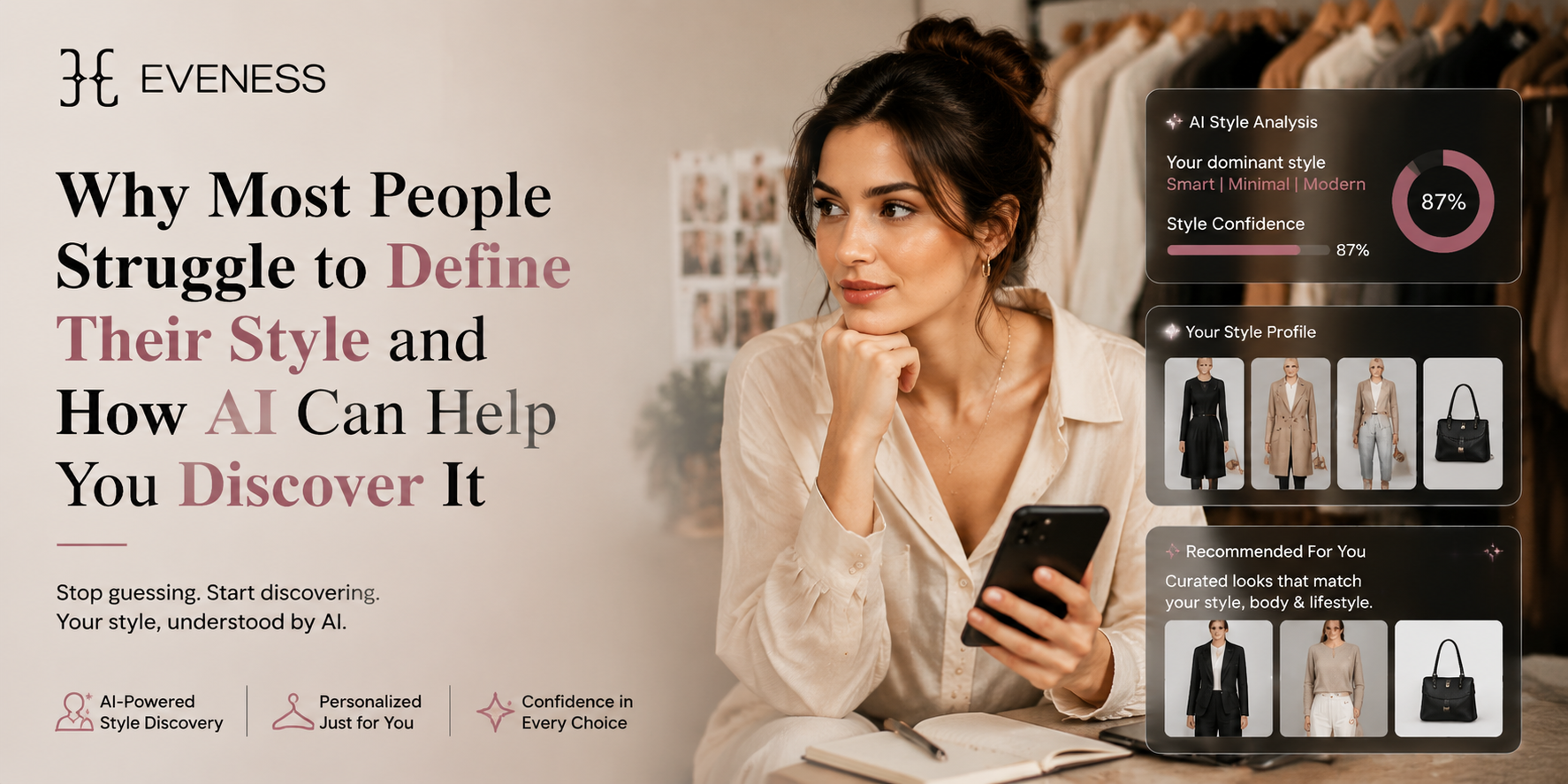
Most people have a closet full of clothes but still feel like they have nothing to wear. They buy pieces they like in the moment, follow trends they see online, and often make purchases that never become part of their daily wardrobe. As a result, defining a personal style feels surprisingly difficult.
The challenge isn't a lack of clothing options. In fact, modern shoppers have more choices than ever. The real problem is understanding which clothes genuinely fit their personality, lifestyle, and long-term preferences. This is where technology is changing the way people approach fashion. Today, AI outfit recommendations help shoppers move from random purchases to more intentional wardrobe decisions.
What Does It Mean to Define Your Fashion Style?
To define your fashion style means identifying the clothing choices that consistently reflect who you are, how you live, and how you want to present yourself. Personal style goes beyond trends. It includes your preferred colours, silhouettes, fabrics, lifestyle needs, and comfort preferences.
Many people struggle to define their personal fashion style because they constantly switch between trends, social media influences, and impulse purchases. Instead of building a wardrobe around their identity, they build one around temporary inspiration.
A strong, defined personal fashion style creates consistency. It helps you shop with confidence, wear more of what you own, and spend less money on clothing that sits unused.
Why People Struggle to Define Their Fashion Style
Too Many Choices
Online shopping platforms offer thousands of products. While variety can be exciting, it often creates decision fatigue. Shoppers become overwhelmed and make purchases based on impulse rather than long-term value.
Following Trends Instead of Preferences
Social media has made fashion trends more accessible than ever. However, what looks great on an influencer may not suit your lifestyle, body type, or personal taste. Constant exposure to trends can make it difficult to understand your own preferences.
Lack of Wardrobe Planning
Many shoppers buy individual pieces without considering how they work with the rest of their wardrobe. This often leads to closets filled with disconnected items that are difficult to style together.
Fit and Size Uncertainty
Sizing inconsistencies remain a major problem in fashion. A medium in one brand may fit like a large in another. Without reliable size recommendation tools, shoppers often purchase clothing that doesn't fit properly, leading to frustration and returns.
How AI Outfit Recommendations Help You Discover Your Style
AI outfit recommendations use data and machine learning to understand what shoppers actually like and wear. Instead of relying on generic fashion advice, AI analyses behaviour patterns to deliver highly personalized suggestions.
An AI based fashion stylist learns from:
Shopping history
Preferred colors
Favorite brands
Style interactions
Lifestyle preferences
Purchase behavior
Over time, recommendations become more accurate because the system continuously learns from user feedback.
Rather than guessing what might work, shoppers receive personal outfit recommendations that align with their unique preferences.
Smart Style Recommendations Based on Real Behavior
One of the biggest advantages of AI styling technology is its ability to identify patterns humans often overlook.
For example, a shopper may believe they prefer trendy statement pieces. However, data may show they consistently wear neutral colours, relaxed fits, and versatile basics. AI can recognise these patterns and provide smart style recommendations based on actual behaviour rather than assumptions.
This helps shoppers gradually define their fashion style through real-world insights instead of trial and error.
Key AI Fashion Tools That Improve Style Discovery
AI Fashion Outfit Generator
An AI fashion outfit generator creates complete looks instead of recommending individual items. Whether you're dressing for work, travel, casual weekends, or special events, the system can build coordinated outfits that fit your style profile.
This makes shopping easier because you can see how pieces work together before purchasing.
AI Outfit Matcher
An AI outfit matcher helps shoppers maximise their existing wardrobe. Instead of buying new clothes for every occasion, users can discover new combinations using items they already own.
An outfit matcher AI system evaluates colour coordination, style compatibility, and outfit balance to create wearable looks.
AI-Powered Wardrobe Recommendations
Many shoppers don't need more clothes; they need better wardrobe organisation.
AI powered wardrobe recommendations identify wardrobe gaps and suggest strategic additions that complement existing pieces. This reduces unnecessary purchases and encourages smarter shopping habits.
Benefits of Using AI to Define Your Style
More Confidence When Shopping: When recommendations are tailored to your preferences, shopping becomes less stressful. You spend less time second-guessing purchases and more time choosing pieces that genuinely fit your lifestyle.
Fewer Impulse Purchases: AI helps filter out products that don't match your style profile. This reduces emotional buying decisions and encourages more intentional purchases.
Better Wardrobe Coordination: Because recommendations consider your existing wardrobe, new purchases are more likely to work with what you already own.
Less Closet Waste: When you buy clothing you're actually likely to wear, fewer items end up forgotten in the back of the closet.
Faster Decision-Making: Instead of scrolling through thousands of products, shoppers receive curated suggestions that match their needs.
How Eveness AI Helps Users Build a Personal Style
Platforms like Eveness AI are transforming AI-powered fashion shopping by making personalization more accessible.
Rather than treating every shopper the same, Eveness AI creates an individualized shopping experience. The platform acts like an AI personal fashion stylist that learns from user behaviour and continuously improves recommendations.
Features include:
AI outfit recommendations
Personalized style analysis
AI powered wardrobe recommendations
Intelligent outfit matching
Curated shopping experiences
AI fashion marketplace discovery
This allows shoppers to build a wardrobe based on their actual lifestyle rather than temporary trends.
Conclusion
Many people struggle to define their personal fashion style because modern shopping offers endless choices but very little guidance. Trend-driven purchases, inconsistent sizing, and overwhelming product catalogues often lead to closets filled with clothes that rarely get worn.
AI is helping solve this problem. Through AI outfit recommendations, AI outfit matcher technology, and AI powered wardrobe recommendations, shoppers can make smarter decisions based on their actual preferences and habits.
If you're tired of buying clothes you never wear, Eveness AI offers a smarter approach. By combining personalized styling, intelligent recommendations, and data-driven insights, it helps you build a wardrobe that reflects who you are and supports how you live.
Frequently Asked Questions
Q1: What does it mean to define your fashion style?
It means identifying the clothing choices that consistently reflect your personality, lifestyle, preferences, and fashion goals.
Q2: What are AI outfit recommendations?
AI outfit recommendations are personalized clothing suggestions generated using data such as shopping behaviour, style preferences, and wardrobe information.
Q3: Can AI really understand my fashion preferences?
Yes. AI learns from your interactions, purchases, favourite styles, and feedback to create increasingly accurate recommendations over time.
Q4: What is an AI outfit matcher?
An AI outfit matcher is a tool that recommends clothing combinations based on your wardrobe, colour preferences, and style profile.
Q5: How can AI help reduce fashion mistakes?
AI reduces impulse purchases, improves outfit coordination, provides size recommendation support, and helps shoppers choose clothing they are more likely to wear regularly.